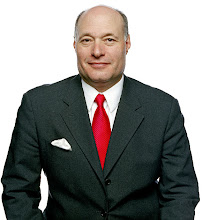
Fuad El-Hibri News

Showing posts with label entrepreneur. Show all posts

Friday, January 7, 2011

CEO took roundabout path to Emergent

By Marjorie Censer

Monday, January 3, 2011

Fuad El-Hibri has lived in all sorts of exotic locales, working for Citicorp in Saudi Arabia, consulting for Booz Allen Hamilton in Indonesia and establishing mobile telecommunications businesses in Russia, Venezuela and El Salvador.

But getting started in his current position as chief executive of Rockville-based pharmaceutical company Emergent BioSolutions took him to a far more mundane location. It was at a public auction in Lansing, Mich., in 1998 that El-Hibri offered a $25 million package of cash and commitments to privatize a government facility that was producing an anthrax vaccine.

Since then, he’s built what is now known as Emergent into a local pharmaceutical company that posted earnings of $31.1 million last year.

El-Hibri took an unusual path into the industry, spending much of his career in telecommunications. Born to a Lebanese father and German mother, he split his childhood between Lebanon and Germany before attending Stanford University. El-Hibri quickly moved on to a graduate degree, heading to Yale’s business school.

Though he wanted to start his own business, El-Hibri wanted to gain experience first. After marrying, he and his wife moved to Saudi Arabia so El-Hibri could work for Citicorp. After several years, he moved to consulting giant Booz Allen Hamilton and spent about three years in Jakarta, Indonesia. In one instance, he helped a state-owned petroleum company in Malaysia open up mini-convenience stores alongside its gas stations.

By the late 1980s, El-Hibri was ready to return to the United States, where he opened his own Potomac-based consulting firm. He quickly began working with the Moscow City Telephone Network and helped the company build and implement a mobile telecommunications network that’s still in use today. Partnering with his father — who had worked in telecommunications — El-Hibri eventually sold his interest in the firm and reinvested in a Venezuelan mobile network. He repeated the work in El Salvador.

What made El-Hibri different from other entrepreneurs was his interest in not just making money but also integrating the business into the local economy, said Brian Kim, whose company invested with El-Hibri in both his Venezuelan and El Salvadoran enterprises.

“He had a real sense that the company had [to do] something else — other than creating value for its shareholders,” Kim said. “He took a very local approach.”

Not long after, El-Hibri got involved with a business venture to sell $50 million worth of anthrax vaccine to the Saudi Arabian government, which was worried about its troops. He immediately took an interest in the field, and, after leading a management buyout of a biotechnology firm in Britain, El-Hibri set out to purchase the only facility producing a Food and Drug Administration-licensed anthrax vaccine in the United States.

He headed to Lansing, where the governor had announced the state would privatize its facility, which also had a licensed rabies vaccine, among others. El-Hibri and his partners submitted the winning bid and began renovating the facility, which was relicensed in 2001.

Emergent, which has its corporate headquarters in Rockville, soon added locations, which now extend from Seattle to Munich to Singapore. Best known for its anthrax vaccine, for which it received in July a contract worth up to $107 million, Emergent is also working on a pandemic flu vaccine and a tuberculosis vaccine.

The most recent contract, from the Department of Health and Human Services Office of the Biomedical Advanced Research and Development Authority, is meant to ready the vaccine for large-scale manufacture.

But El-Hibri doesn’t plan to end his career with pharmaceuticals and said he’d next like to work in the environmental field. (In 2001, El-Hibri launched the El-Hibri Charitable Foundation, which focuses on interfaith dialogue and peace education.)

Roberto Smith-Perera, a former minister of transport and communications in Venezuela who partnered with El-Hibri on both the Venezuelan and El Salvadoran cellular businesses, credited El-Hibri’s geographically and culturally diverse background with teaching him how to handle virtually any kind of business.

He’s the kind of person “that specializes in not . . . being a specialist,” said Smith-Perera. “He’s the ultimate project developer.”

Reprinted from the January 3, 2011 edition of The Washington Post

Thursday, December 10, 2009

Emergent BioSolutions reacts to BARDA's Request for Proposal cancellation

by Nick Rees on December 8, 2009

The Office of the Biomedical Advanced Research and Development Authority has advised Emergent BioSolutions that while BARDA's Request for Proposal has been canceled, Emergent is encouraged to submit a proposal for the office's Broad Agency Announcement.

BARDA canceled the RFP for the procurement for rPA vaccines after a technical evaluation panel determined that no proposals submitted by vaccine developers could meet the ProjectBioShield statutory requirement of having the product ready for licensure within eight years.

An amendment issued by BARDA to BAA 09-34 at the same time, however, enable companies to submit proposals to obtain development funding for rPA vaccine candidates, which Emergent has been strongly encouraged to do by BARDA.

Emergent plans to submit its proposal to the BAA by the end of this year, in front of the due date of February 1, 2010 for the proposals.

This announcement also does not impact Emergent's $400 million procurement with the Centers for Disease Control and Prevention to manufacture and deliver 14.5 million doses of BioThrax for the Strategic National Stockpile.

“With this action, BioThrax remains a critical and long-term countermeasure for the US government,” Fuad El-Hibri, chairman and chief executive officer of Emergent BioSolutions, said. “In addition, based upon encouragement by the USG, we believe our rPA vaccine is well-positioned to obtain a development contract under this BAA. Our anthrax franchise solidifies Emergent as a leader in the development and supply of anthrax medical countermeasures.”

BioThrax is currently being delivered under this contract with an expected completion of deliveries by September 2011. BioThrax is the only FDA licensed vaccine for the prevention of anthrax diseases.

“We believe that BioThrax will remain a premier product based on its recent enhancements, such as four-year dating, a reduced vaccination schedule and intramuscular route of administration, together with the potential for a further reduction in the vaccination schedule to a 3-dose primary series with a 3-year boost," Daniel J.Abdun-Nabi, president and chief operating officer of Emergent BioSolutions, said. "BioThrax continues to be the product of choice for the USG and other customers seeking to address the anthrax threat.”

BARDA and Emergent are also in separate talks for a contract that would see BARDAA fund scale-up and related activities to obtain FDA licensure for large-scale production of BioThrax at Emergent's new 50,000-square-foot Lansing, Mich., manufacturing facility.

"I am proud that Lansing remains home to America's first line of defense against what experts say is the single biggest bioterror threat, anthrax," U.S. Rep. Mike Rogers, MI-08, said. "The good news about the cancellation of this particular proposal is HHS recommitted itself to the Lansing-made anthrax vaccine and has opened a new proposal for a next-generation anthrax vaccine for which Emergent has indicated it will compete.

"Rest assured, I will continue working to strengthen our nation's existing bioterror preparedness measures and protect national security jobs in Lansing."

Thursday, October 15, 2009

Lebanese CEO Sees Opportunity in Current Crisis

Daily Star


July 10, 2009

http://www.dailystar.com.lb/article.asp?edition_id=1&categ_id=3&article_id=104008

Chairman and CEO Fouad El Hibri insists that good business opportunities often arise in time of crisis, which he considers the best time for entrepreneurs to invest in new projects. “When the market is down, I believe that good opportunities arise and investors have better chances to find assets that are undervalued and able to provide wonderful returns in the future,” Hibri told The Daily Star.


“I see within any turmoil great opportunities,” he said.


Hibri, an American entrepreneur with Lebanese heritage, is the winner of Ernst & Young Entrepreneur of the Year 2009 Award in the Technology category in greater Washington. With great persistence and commitment, Hibri was able to successfully grow a pharmaceutical biotech facility that is worth hundreds of millions of dollars and was previously owned
and run by the state of Michigan.